🔥 FREE SHIPPING ON ORDERS $34.99+ 🚚

Size guide
Four measurements decide whether a piece fits: gauge, post length, inner diameter and front size. Here’s what each one means, and how to check the size you already wear.
The four measurements
Gauge — how thick the bar is
Gauge is the thickness of the bar. It is written with a G: 20G, 18G, 16G.
The numbering runs backwards. A higher number means a thinner bar, so 20G is thinner than 16G. This catches most people out the first time.
Gauge is the one measurement that has to match. A bar thicker than the one you wear will not go in, and a thinner one will move around.
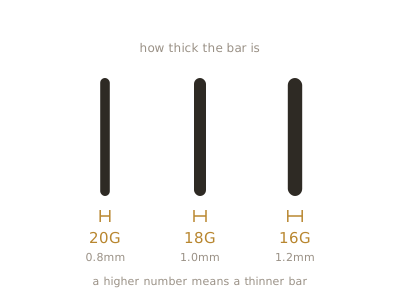
| Gauge | Millimetres | In stock |
| 22G | 0.6mm | |
| 20G | 0.8mm | ● |
| 18G | 1.0mm | ● |
| 16G | 1.2mm | ● |
| 14G | 1.6mm |
Post length — the bar behind the front
Post length is measured from the back of the front to the point where the shape changes. Where that point is depends on the shape — the flat back on a straight post, the corner on an L-shape, the start of the curve on a corkscrew.
This measurement applies to studs and barbells. Rings use inner diameter instead.
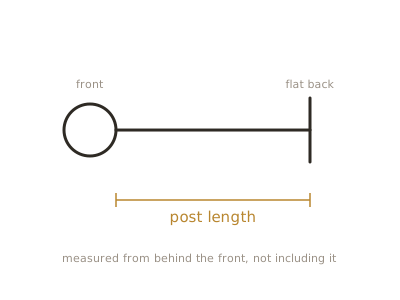
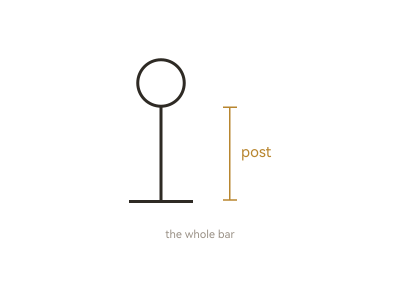
Straight post
The whole bar, from behind the front to the flat back.
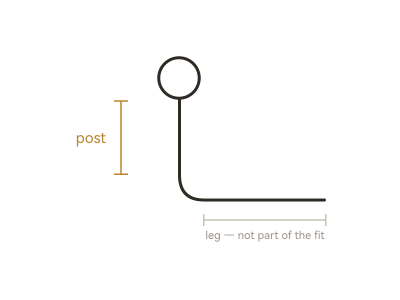
L-shaped post
Only the straight section. The leg sits outside and isn't part of the fit.
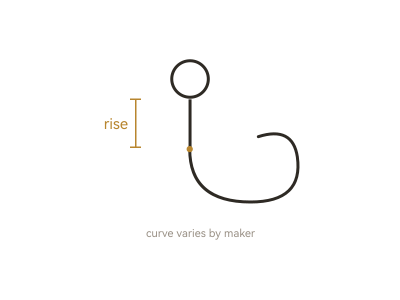
Corkscrew post
The straight rise before the curve. Curves aren't standardised, so corkscrews vary between makers.
Inner diameter — across the inside of the ring
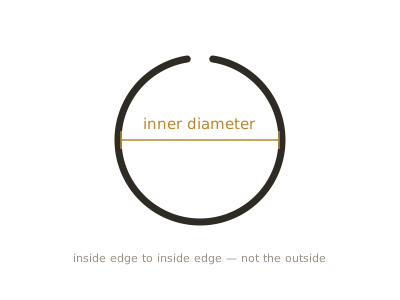
Inner diameter is measured across the inside of the ring, from one inner edge to the other. It is not the outside measurement, and it is not the thickness of the wire.
This applies to hoops, horseshoes, clickers and captive rings.
A ring that is too small will not close. One that is too large will turn and sit loosely.
Head size — how big it looks
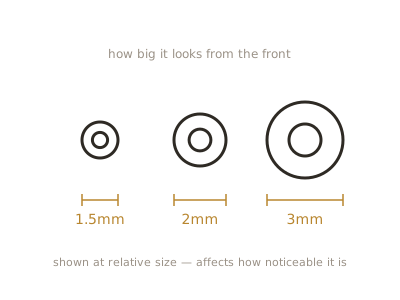
Head size is the width of the decorative part — the stone, ball or shape that sits on the outside.
It doesn’t affect whether a piece goes in. It only affects how noticeable it is. A small stone reads as a point of light; a larger one reads as jewellery.
If you want something that stays in the background, look at this number.
How to check the size you wear
Three ways, from easiest to most precise.
Check the packaging
Most jewellery is sold with the gauge and length printed on the card, or listed on the receipt. This is the quickest answer if you still have it.
Measure it
Take the piece out and measure it with a digital caliper. Measure the bar for gauge, and the post or inner diameter for length.
Ask your piercer
If you no longer have the packaging or a caliper, the person who did your piercing can measure it in seconds — and they'll know what was originally fitted.
By style
Not every measurement applies to every piece.
| Style | How it opens | What to check |
|---|---|---|
| Flat back labret | Front unscrews or push-fits | Gauge · Post length · Head size |
| L shape stud | Straight in, turns at the bend | Gauge · Post length |
| Screw stud | Turns in along the spiral | Gauge · Post length |
| Ball end stud | Straight in, fixed ball | Gauge · Post length |
| Retainer | Straight in, no decorative front | Gauge · Post length |
| Seamless ring | Twists apart sideways | Gauge · Inner diameter |
| Clicker & segment ring | Hinged or removable segment | Gauge · Inner diameter |
| Open hoop | Already open at one point | Gauge · Inner diameter |
| Septum clicker | Hinged segment, clicks shut | Gauge · Inner diameter |
| Balls unscrew | Gauge · Inner diameter | |
| Septum retainer | Straight in, no decorative front | Gauge · Inner diamete |
Common questions
Why is 20G thinner than 16G?
Gauge works in reverse: the higher the gauge number, the thinner the jewelry.
For common nose jewelry sizes:
20G — 0.8 mm
18G — 1.0 mm
16G — 1.2 mm
So, 20G is thinner than 18G, while 16G is thicker than both.
If you’re replacing an existing piece, checking the gauge of your current jewelry can help you choose the right size.
Do I measure the inside or the outside of a ring?
The inside.
For nose rings, the listed diameter refers to the inner diameter — measured from one inner edge of the ring to the other.
Measuring across the outside will give you a larger number because it includes the thickness of the ring itself on both sides.
Does post length include the front?
No. It’s measured from the back of the decorative front to the point where the shape changes — the flat back on a straight post, the corner on an L-shape, the start of the curve on a corkscrew.
Why won't my screw stud go in?
A screw stud follows a spiral — it turns in rather than pushes in.
Pushing it straight won’t thread it through. Follow the curve instead.
How do I open a seamless hoop?
Twist the two ends apart sideways — one forward, one back. Don’t pull it wider; that changes the shape and it may not line up again.
I wear a 20G corkscrew from another brand — will yours fit the same?
Not necessarily. Corkscrew curves aren’t standardised, so two pieces listed at the same gauge and length can sit quite differently between makers.
What if I'm between two sizes?
If you’re replacing a piece, the easiest starting point is to match the gauge and measurements of jewelry you already wear comfortably.
If you don’t have a reference piece, don’t guess based on appearance alone. A professional piercer can measure your piercing and help determine the gauge, length, or diameter that fits you best.
Where are sizes listed on your products?
On every product page. Studs list gauge and post length; rings list gauge and inner diameter.
I have a question about a new or unsettled piercing.
That’s a conversation for the person who did your piercing — they can see it, and we can’t. We can help with sizing, materials, orders and returns.
Know your size?
Filter by gauge, length or inner diameter and see what fits.